
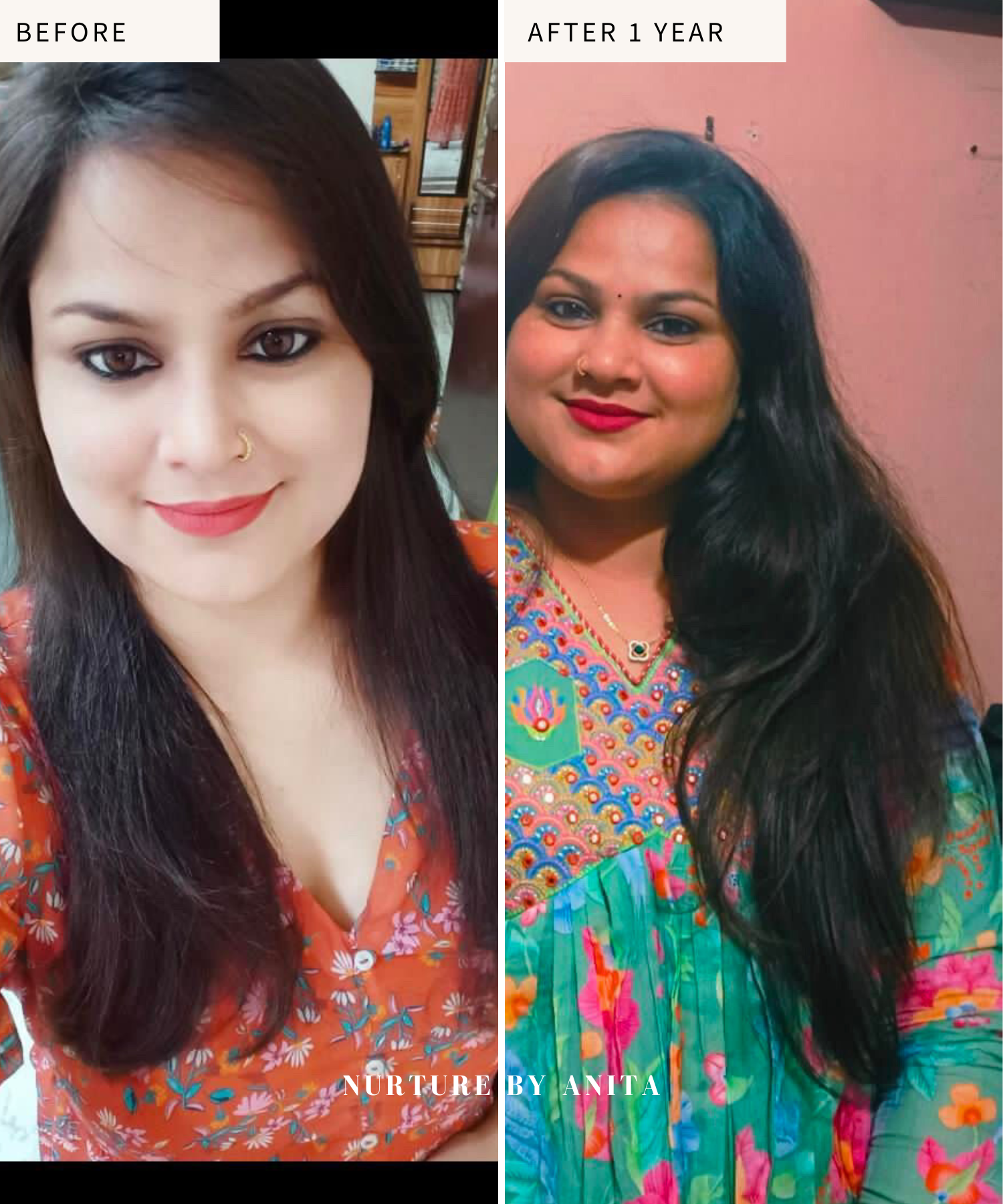

Hair thinning in women is increasingly common, yet most questions about it go unanswered or are buried in conflicting advice.
If you’ve noticed your ponytail shrinking, your part widening, or your crown looking less dense, you’re not alone.
Below, we answer the most commonly searched questions about hair thinning, clearly, honestly, and without panic.
What Is Hair Thinning?
Hair thinning refers to a gradual reduction in hair density across the scalp. It does not always mean bald patches - instead, hair becomes finer, weaker, and less voluminous over time.
Thinning happens when:
- Hair follicles shrink
- The growth phase shortens
- More strands enter the shedding phase
It is often progressive - but manageable when addressed early.
What Causes Hair Thinning in Women?
Hair thinning is rarely caused by just one factor. The most common causes include:
- Hormonal imbalances
- Chronic stress
- Nutrient deficiencies
- Thyroid disorders
- Genetic predisposition
- Postpartum hormonal shifts
- Insulin resistance
- Aging
Often, it’s a combination. If you're unsure which category you fall into, start with our Hair Fall Master Guide to identify your likely root trigger.
Is Hair Thinning the Same as Hair Loss?
Not exactly.
Hair loss usually refers to excessive shedding or visible bald patches.
Hair thinning refers to gradual miniaturisation, where strands become finer and overall density reduces.
You can experience thinning without dramatic shedding.
Why Is My Hair Thinning at the Crown?
Crown thinning in women is commonly linked to:
- Hormonal sensitivity to androgens
- Insulin resistance
- Female pattern hair loss
- Chronic stress
The crown area is particularly hormone-sensitive, which is why density often reduces there first.
Can Stress Cause Hair Thinning?
Yes.
Chronic stress increases cortisol levels, which can:
- Push hair into shedding phase (telogen effluvium)
- Disrupt the hair growth cycle
- Reduce follicle productivity
Hair thinning from stress often appears 2–3 months after a stressful event. Supporting the nervous system is just as important as scalp care.
Does Hair Thinning Grow Back?
In many cases, yes - if the root cause is addressed.
Hair thinning due to:
- Stress
- Nutritional deficiency
- Postpartum changes
- Temporary hormonal imbalance
can improve significantly with correction. Genetic thinning may require long-term management rather than reversal.
How Do I Know If My Hair Is Thinning?
Common early signs:
- Widening hair part
- Reduced ponytail thickness
- Hair feels finer than before
- Visible scalp in bright light
- Slower regrowth
Early detection gives you the best chance of recovery.
Can Low Iron Cause Hair Thinning?
Yes.
Low ferritin (iron stores) is one of the most overlooked causes of hair thinning in women.
Hair follicles require iron to remain in the growth phase. When iron is low, the body prioritises essential organs — not hair. Testing ferritin levels is crucial if thinning persists.
Does Vitamin D Deficiency Cause Hair Thinning?
Vitamin D plays a role in follicle cycling.
Low levels are associated with:
- Increased shedding
- Slower regrowth
- Reduced density
Correcting deficiency can improve long-term hair strength.
Can Thyroid Problems Cause Hair Thinning?
Yes.
Both hypothyroidism and hyperthyroidism can disrupt the hair cycle.
Hair may become:
- Dry
- Brittle
- Thinner across the scalp
A full thyroid panel is more helpful than TSH alone.
Does PCOS Cause Hair Thinning?
Yes. PCOS increases androgen levels, which can shrink hair follicles and cause thinning at the crown.
It may also present with:
- Acne
- Irregular cycles
- Increased facial hair
Managing insulin resistance is often key.
Can Hair Thinning Be Reversed Naturally?
It depends on the cause.
If thinning is due to stress, deficiency, or mild hormonal shifts - natural correction through:
- Nutritional support
- Stress regulation
- Consistent scalp stimulation
- Proper oiling rituals
can significantly improve density. For advanced genetic thinning, improvement may be gradual but possible with consistency.
What Is the Best Oil for Hair Thinning?
The best oil depends on your scalp type.
- For Crown/Overall thinning → Alternating Hibiscus Hair Oil & AloeSesame Hair Oil
- For Crown/Temple thinning (Oily Scalp Type) → Alternating Hibiscus Hair Oil & Rosemary Bhringraj Mustard Hair Oil
- For Crown/Temple thinning (Dry Scalp Type) → AloeSesame Hair Oil + Rosemary Bhringraj Mustard Hair Oil
- For postpartum thinning → Rosemary Bhringraj Mustard Hair Oil
See our complete Hair Oiling Regimen Guide to choose correctly.
How Often Should I Oil Thinning Hair?
Typically 1–2 times weekly before washing, or ideally before every hair wash.
Avoid excessive overnight oiling if shedding is active.
Consistency matters more than duration.
How Long Does It Take to See Results?
Hair cycles take time.
- Reduced shedding: 6–8 weeks
- Baby hair growth: 8–12 weeks
- Visible density improvement: 3–6 months
Quick fixes rarely create lasting change.
Can Tight Hairstyles Cause Thinning?
Yes. Repeated tight ponytails or braids can cause traction alopecia - gradual thinning at the hairline or temples.
Loosening hairstyles and reducing tension can prevent progression.
Does Aging Cause Hair Thinning?
As women age:
- Growth phase shortens
- Follicles become less active
- Hair diameter decreases
This is natural - but it can be slowed with proper scalp care and hormonal support.
Does collagen help with hair thinning?
Collagen supports the connective tissue surrounding hair follicles and plays a role in maintaining scalp elasticity. Natural foods that boost collagen production (and support stronger hair growth) include:
- Amla (Indian gooseberry) – Extremely rich in Vitamin C
- Citrus fruits (oranges, lemons) – Stimulate collagen synthesis
- Guava – High Vitamin C + antioxidants
- Pomegranate – Improves blood circulation to the scalp
- Leafy greens (spinach, moringa) – Provide iron + Vitamin C synergy
- Pumpkin seeds – Zinc for follicle repair
- Sesame seeds – Copper supports collagen formation
- Soaked almonds – Vitamin E for scalp nourishment
Can washing hair too often cause thinning?
No, washing frequency does not directly cause thinning. However, harsh shampoos that strip the scalp of its natural oils can irritate follicles over time.
If you wash frequently, choose a gentle, sulphate-free cleanser and follow with scalp oiling before washes to maintain barrier health.
Does wearing your hair up every day cause thinning?
Repeated tension from tight styles, ponytails, buns, or braids worn daily, can cause traction alopecia, a form of thinning at the hairline and temples. This is mechanical, not hormonal. Alternating hairstyles and avoiding tight elastics near the hairline reduces the risk significantly.
Is hair thinning after stopping birth control/hormonal pills normal?
Yes, and it is more common than most women are told. When you stop hormonal medication, oestrogen levels drop temporarily, which can trigger a shedding phase similar to postpartum hair fall. This typically begins 2–3 months after stopping and can last 3–6 months. It is usually temporary, but scalp support and nutritional correction during this window helps.
Can scalp massages really help with thinning?
Yes, consistently, not occasionally. Scalp massage improves microcirculation, which means better nutrient and oxygen delivery to the follicle.
Studies have shown that regular scalp massage can increase hair thickness over time. 5–7 minutes during your oiling routine, 2–3 times weekly, is enough to make a measurable difference.
Does thinning hair mean I'll eventually go bald?
Not necessarily. Female hair thinning is rarely the same as male pattern baldness. In most women, it presents as diffuse thinning — reduced density across the scalp — rather than complete follicle loss.
Addressing the root cause early significantly improves outcomes. Complete baldness in women is rare and usually linked to specific medical conditions that a doctor can identify.
Is dry shampoo making my hair thinner?
Used occasionally, dry shampoo is unlikely to cause thinning. But used frequently — especially at the scalp — it can cause product buildup that blocks follicles, leads to scalp irritation, and over time weakens roots. If you rely on dry shampoo regularly, consider oiling and washing more consistently rather than substituting.
What is the difference between miniaturisation and normal shedding?
Normal shedding is when full-length strands fall out as part of the natural hair cycle — this is healthy.
Miniaturisation is different: the follicle itself shrinks over time, producing progressively finer, shorter strands until it stops producing hair altogether. If you notice the shed hairs are getting shorter and thinner at the root end, that is miniaturisation — and it warrants attention sooner rather than later.
Should I See a Doctor for Hair Thinning?
Consult a doctor if:
- Thinning is sudden or severe
- You notice bald patches
- You have scalp pain or inflammation
- Hair fall continues beyond 6 months
Blood work often provides clarity.
What Should You Do If Your Hair Is Thinning?
- Identify root cause (read the Hair Fall Master Guide)
- Get necessary blood tests
- Regulate stress and sleep
- Start a consistent oiling ritual
- Correct nutritional gaps
Hair thinning is not random.
It is feedback.
Hair thinning can feel alarming - but in many cases, it is reversible or manageable.
The earlier you understand the cause, the better your results. Support your body. Support your scalp. Stay consistent.
Your hair responds to long-term care - not panic.